
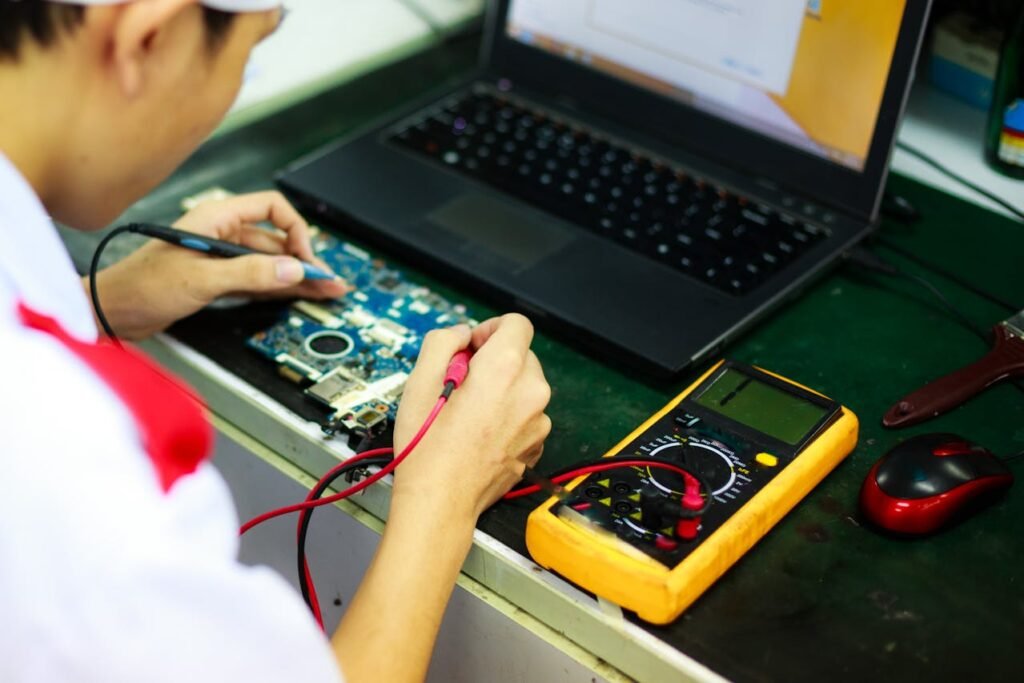
They built a brilliant device. It passed every lab test. The demo wowed investors. The launch went live. However, within weeks, complaints began to pour in that devices froze, batteries drained, and unexpected shutdowns occurred in critical scenarios. The culprit? Firmware instability during power fluctuations in real-world environments.
What worked perfectly in a controlled lab setting often cannot survive in field conditions.
This isn’t a one-off case.
Most embedded system failures don’t happen on the engineer’s desk; they happen in the field, when the stakes are real.
And when they do, they’re not just technical failures, they’re business setbacks. Costly recalls, broken customer trust, regulatory issues, and delayed go-to-market plans.
But the good news is that these failures are avoidable.
In this blog, we’ll uncover the four most common culprits behind field failures: firmware instability, memory leaks, power issues, and lack of environmental testing, along with strategies to bulletproof your next product.
Why Firmware Stability Is Invisible Achilles Heel?
When embedded systems freeze, reboot unexpectedly, or exhibit erratic behavior in real-world use, the issue is rarely apparent and often indicates firmware instability.
It’s one of the most insidious problems in embedded product development. Why? Because everything can look perfectly fine during initial testing. But once deployed in the field, under varying conditions and usage patterns, the cracks begin to show.
What causes firmware instability?
The most common culprit is poor exception handling. Many systems aren’t built to gracefully manage unexpected inputs, invalid states, or hardware anomalies. When something goes wrong, the device crashes or worse, enters a corrupted state with no way to recover.
Then there are race conditions and timing errors, especially in interrupt-heavy or multithreaded environments. These bugs are notoriously hard to replicate, often surfacing only under specific load conditions or during long runtimes.
Lastly, state machine design is often overlooked. A poorly designed or overly complex state machine can create edge-case failures, where the system transitions into undefined or conflicting states, resulting in unpredictable behavior.
Why does this hurt your product?
Escalating customer complaints: Instability shakes user confidence. For critical applications, such as those in the medical or industrial sectors, this can have severe consequences.
Bugs that vanish when tested: These issues are difficult to reproduce in lab environments, making them time-consuming and expensive to fix.
Patching becomes a nightmare: You’re forced to issue OTA updates or recall devices, burning time, money, and reputation.
Even if your product works 90% of the time, that 10% instability becomes a deal-breaker when it affects core functions or occurs in mission-critical moments.
How to bulletproof firmware against instability?
Design with failure in mind: Build a robust error-handling framework that includes fallback modes, fail-safes, and watchdog timers. Assume things will go wrong and plan recovery paths accordingly.
Test early and often: Incorporate unit testing and static code analysis into your CI pipeline. Don’t just test happy paths; simulate failure scenarios and unexpected inputs.
Leverage RTOS best practices: Many stability issues arise from the misuse of real-time operating systems. Prioritize deterministic task execution, minimize shared resources, and use message queues or semaphores correctly.
Instrument your firmware: Use logs and traces to monitor system behavior over time. This is invaluable when debugging issues that only appear after days or weeks of uptime.
Ultimately, firmware isn’t just about functionality; it’s about resilience. And resilience isn’t built at the end of development; it’s architected from the beginning.
Failing to prioritize firmware stability is like building a skyscraper on shaky soil. It might look fine from the outside, but eventually, something will give.
Memory Leaks Is The Silent System Killer
A memory leak occurs when a program allocates memory for temporary use but fails to release it. Over time, this “forgotten” memory accumulates, reducing the amount of available memory and eventually causing the system to stall or crash.
Unlike desktop environments, embedded systems are often resource-constrained; they can’t rely on the operating system to handle memory cleanup or recovery. In lower-level languages like C or C++, there’s no built-in garbage collection. Every allocation must be paired with a proper deallocation. Miss that once, and you’ve got a leak.
What are the Common root causes?
Dynamic memory mismanagement: Misuse of malloc/free or new/delete operations without tracking allocations leads to fragmentation and orphaned memory blocks.
Unreleased buffers: If a buffer is allocated during an interrupt or process but never released due to an exception or conditional flow, it stays locked forever.
Recursive functions without limits: Unexpected recursive calls may keep allocating memory on the stack, leading to overflow or long-term instability.
Why memory leaks are hard to catch?
Because the symptoms show up late.
Your system may function perfectly in early tests. However, as the device continues to run, especially in continuous-use environments like industrial controllers or IoT devices, those tiny leaks accumulate. Suddenly, your product begins to fail weeks after passing QA.
This becomes a nightmare in production:
– Bugs that didn’t exist in the lab now plague field units.
– Your team is firefighting in panic mode, often without root cause clarity.
– Field updates are costly and reputation-damaging.
How to detect and prevent memory leaks?
1) Use static and dynamic analysis tools.
Tools like Valgrind, PC-lint, and cppcheck help identify leaks, dangling pointers, and memory corruption before they reach production.
2) Instrument memory diagnostics during testing.
Track every allocation and deallocation. Use memory usage counters, simulate long uptimes in test environments, and stress-test with variable loads.
3) Avoid dynamic allocation altogether (if possible).
In embedded systems, it’s often better to implement memory pools as fixed-size chunks of pre-allocated memory that are reused efficiently, avoiding fragmentation and allocation overhead.
4) Create memory leak tests as part of your QA process.
Monitor memory consumption over extended test runs. If it grows steadily without bound, there’s a leak.
Memory leaks don’t announce themselves; they just quietly grow until the system fails. That’s why catching them early is critical.
Because in embedded systems, stability isn’t optional. It’s the difference between a product that lasts and one that gets returned.
Lack of Environmental Stress Testing Is The Silent Field Failure Trigger
Your product performs flawlessly in the lab. However, once it’s deployed in the real world, exposed to heat, dust, moisture, or vibration, it begins to malfunction.
This is one of the most common yet overlooked pitfalls in embedded system design: insufficient environmental stress testing.
Many development teams rely on datasheet specs and clean-room testing to validate performance. But real-world conditions are far from ideal. A medical device used in rural clinics, an agricultural sensor in monsoon-prone areas, or an automotive controller under the hood all face unpredictable and harsh operating environments.
Failing to simulate these conditions during development leads to field failures that are hard to predict and even harder to fix once products are deployed.
What Are The Common oversights?
– Ignoring the impact of electromagnetic interference (EMI) from nearby equipment
– Not testing against temperature extremes or rapid thermal cycling
– Skipping exposure to humidity, water ingress, and dust
– Relying too heavily on component-level certifications instead of system-level testing
What Are The Best practices that help?
HALT (Highly Accelerated Life Testing): Pushes devices beyond operational limits to identify weak links early.
Environmental chambers: Simulate conditions like high/low temperature, humidity, and salt fog for pre-certification validation.
Field simulation rigs: Mimic actual deployment scenarios (e.g., vibration, dirty power supply, external radio interference) to stress-test the product.
Industries such as automotive, aerospace, agriculture, and healthcare can’t afford failures in field conditions. The risk isn’t just functional, it’s regulatory, reputational, and even life-threatening.
Environmental resilience is not a “nice to have,” it’s a fundamental design requirement. Test for the extremes, not just the ideal, and your product will stand tall where others fail.
The Real Cost of Failure
When an embedded system fails in the field, financial damage is just the beginning.
A malfunctioning product doesn’t just need a redesign; it triggers a domino effect: recall logistics, increased customer support burden, and worst of all, a loss of brand trust that’s hard to recover from.
In regulated industries like MedTech or IoT, the stakes are even higher. A single non-compliant device can result in penalties, revoked certifications, and legal scrutiny. In 2017, a prominent insulin pump manufacturer had to recall over 400,000 units due to a firmware flaw affecting dose delivery. Not only did it incur millions in logistics and redesign costs, but it also caused long-term damage to their clinical credibility.
These failures also come with hidden costs.
Delays in patching or redesigning slow down your go-to-market timelines, allowing competitors to gain a competitive advantage. Early adopters lose confidence, and potential investors begin to question the viability of your engineering team.
Another example: a leading European agriculture-tech startup lost a major distribution deal after its soil sensors failed under field conditions due to high humidity. Though the lab tests had passed, real-world stress was never simulated. The startup had to raise emergency funds to rework its product, but the market trust was never fully restored.
The bottom line? Field failures aren’t just technical issues; they’re business risks.
Investing in stability, environmental validation, and resilience upfront may seem expensive, but it’s far cheaper than losing your reputation and market momentum later.
How to Build for Real-World Resilience?
Building embedded systems that survive real-world conditions requires more than just passing functional tests. It demands a shift in engineering mindset from building for functionality to building for resilience.
Start by adopting a test-first firmware culture. Don’t wait until integration to start debugging. Build modular, testable firmware with clear error-handling paths and state management from the beginning.
Second, power and memory profiling should start on Day 1, not as a last-minute QA step. Many field failures stem from memory leaks or power brownouts that only appear over extended runtime. Regular profiling helps catch these early when they’re still cheap to fix.
Third, always simulate real-world scenarios, not just ideal conditions. Dust, EMI, battery drops, and extreme temperatures – these aren’t exceptions; they’re part of daily operations in automotive, MedTech, agriculture, and industrial settings.
Finally, don’t go it alone. Partner with embedded engineering teams who’ve shipped products and dealt with failures in the field. Practical experience often reveals edge cases that theory cannot.
If you’re building your next product, resilience isn’t optional; it’s a business differentiator. Bring in the right expertise early, and you’ll save time, cost, and customer frustration down the road.
 Sr. Test Engineer
 Sales Marketing Manager
 Marketing & Sales – BBA : Fresher