January 2026

Automotive Electronics

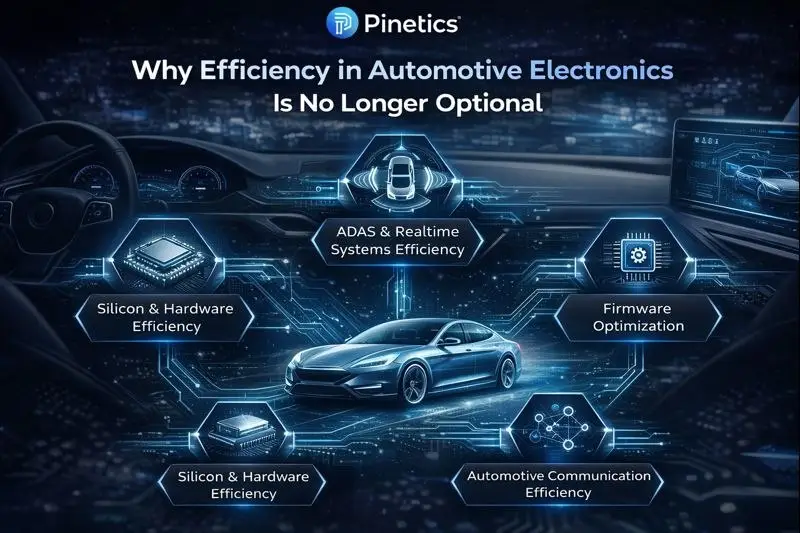
Why Efficiency in Automotive Electronics Is No Longer Optional

Modern vehicles are no longer defined solely by mechanical engineering. Today cars are real-time computing ecosystems on wheels, powered by millions of lines of code, dozens of electronic control units (ECUs), high-speed networks, and complex software stacks. Advanced Driver Assistance Systems (ADAS), infotainment platforms, battery management systems, vehicle-to-everything (V2X) communication, and autonomous features all operate simultaneously, often under strict real-time

Why Efficiency in Automotive Electronics Is No Longer Optional Read More »
Medical Devices

Predictive Cardiology and the Future of Medical Devices

Atrial fibrillation (AF) is one of the most common and most dangerous cardiac arrhythmias worldwide. Its greatest threat lies in its silence. Many patients live with AF for months or even years without noticeable symptoms, until the condition suddenly manifests as a stroke or severe cardiovascular complication. Traditional diagnostics rely on episodic monitoring, symptom reporting,

Predictive Cardiology and the Future of Medical Devices Read More »

Embedded Systems

What Is the Foundation of Reliable Embedded Systems?

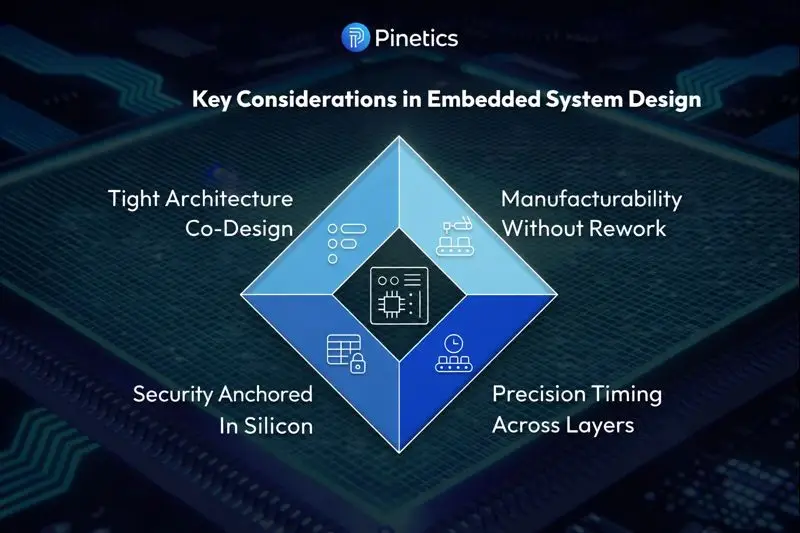
The foundation of reliable embedded systems is hardware and software engineered as one tightly coupled system rather than as layers stacked on each other. Silicon choice, firmware behaviour, timing, security, manufacturability and scale are decided together from day one, because an embedded product lives in the physical world of voltage, temperature, interference and real-time deadlines,

What Is the Foundation of Reliable Embedded Systems? Read More »

Smart Tool

How Does AI-Driven Smart Tool Management Deliver Tool Accountability?

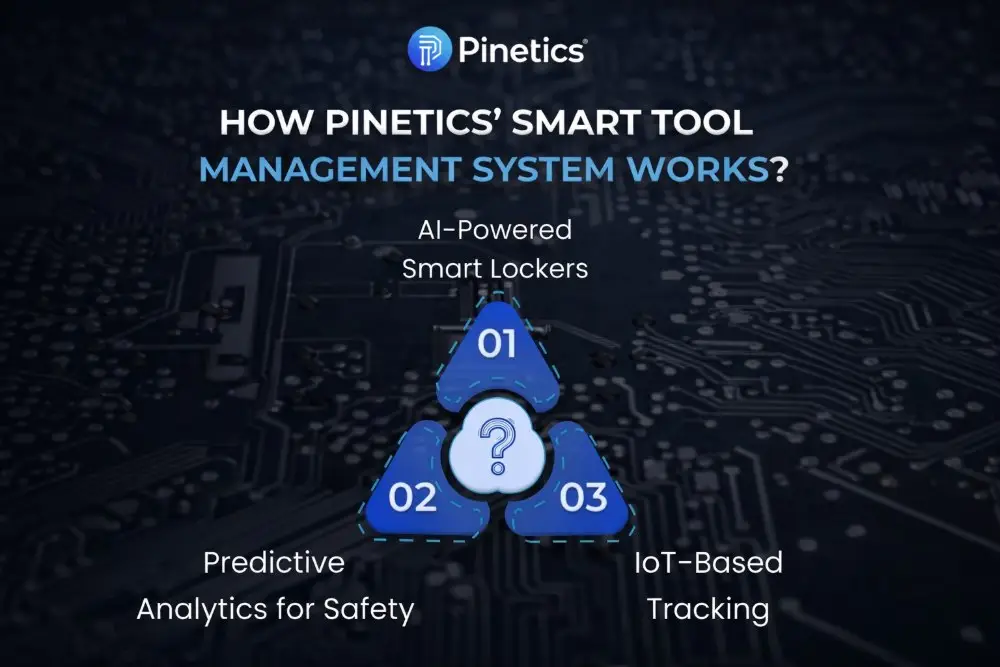
Smart tool management delivers tool accountability by making the record automatic. A worker authenticates at a locker, the locker releases a specific tool, a tag reports where that tool goes, and every event is logged with a name, a time and a location. Nobody writes anything down, and industrial safety stops depending on a paper

How Does AI-Driven Smart Tool Management Deliver Tool Accountability? Read More »

Medical Device Hardware Designs

Miniaturization in MedTech: Redefining the Future of Care

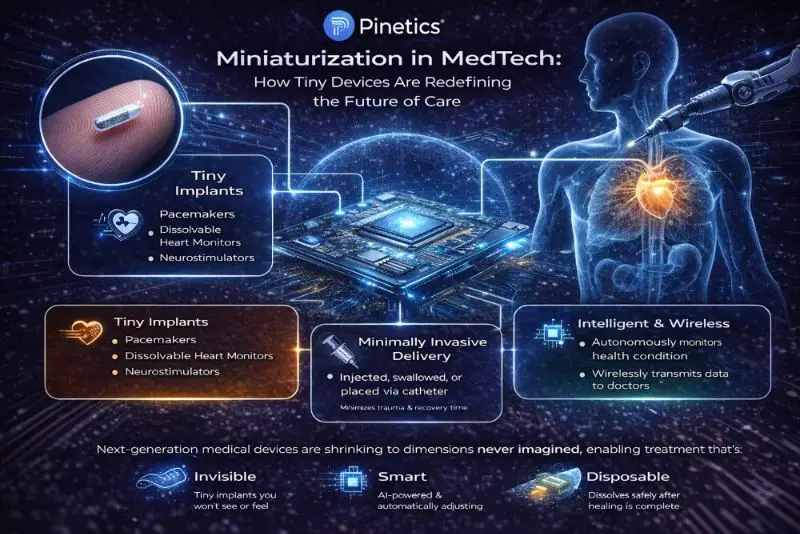
When people talk about innovation in healthcare technology, conversation often centers around smarter algorithms, faster processing, or more powerful analytics. But one of the most transformative shifts happening in medicine today is not about speed or power at all.  It is about size.  Across the world, researchers and engineers are shrinking life-saving devices to scale once considered impossible. We

Miniaturization in MedTech: Redefining the Future of Care Read More »

Autonomous Smart Lockers

The Future of Smart Lockers Is Autonomous and Decentralized

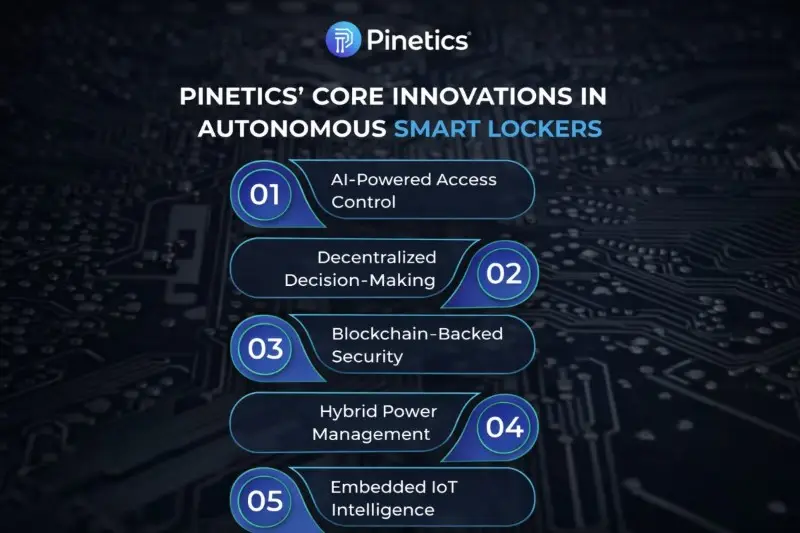
Smart infrastructure is evolving rapidly, but many “smart” systems still carry the limitations of yesterday’s architecture. Smart lockers are a perfect example. While widely deployed in logistics, retail, corporate campuses, residential buildings, and healthcare environments, most existing smart locker systems continue to depend heavily on centralized servers and constant internet connectivity.  This dependence creates hidden operational

The Future of Smart Lockers Is Autonomous and Decentralized Read More »

Future of IoT

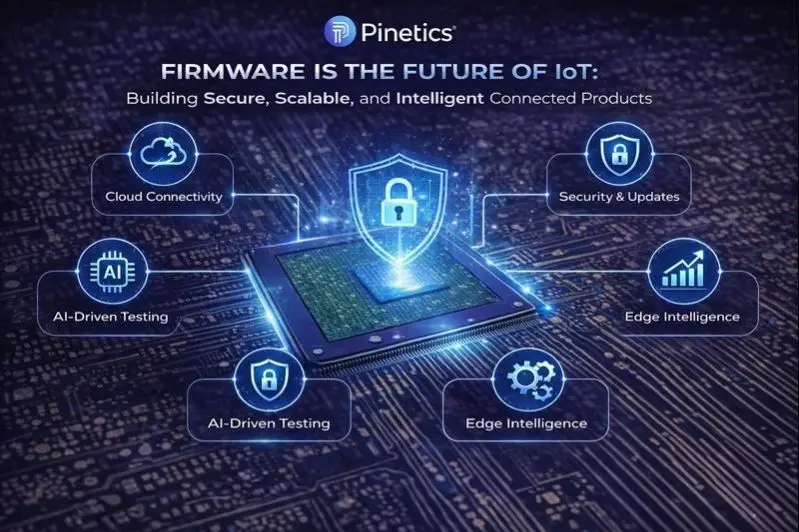
Firmware as the Foundation of Secure, Scalable IoT Systems

Firmware is the backbone of the Internet of Things. It is more than just low-level device software; it is the intelligence layer that determines how secure a device is, how efficiently it performs, how long it lasts in the field, and how easily it adapts to new requirements.  Without robust firmware, even the most advanced hardware becomes

Firmware as the Foundation of Secure, Scalable IoT Systems Read More »

Workforce Flexibility

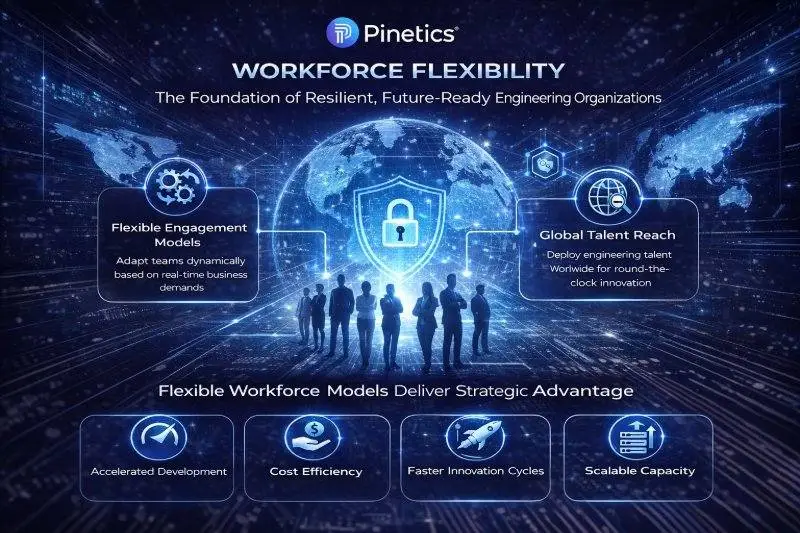
Foundation of Resilient, Future-Ready Engineering Organizations

The pace of business transformation has accelerated beyond anything organizations experienced in previous decades. Market dynamics shift rapidly, technology stacks evolve continuously, and customer expectations change in real time. Yet many companies are still constrained by the workforce and hiring models designed for a far more predictable world.  Traditional hiring structures assume stability, fixed workloads, well-defined skill requirements, and

Foundation of Resilient, Future-Ready Engineering Organizations Read More »

Reducing Embedded Boot Time

How Do You Reduce Boot Time on an Embedded Linux Device?

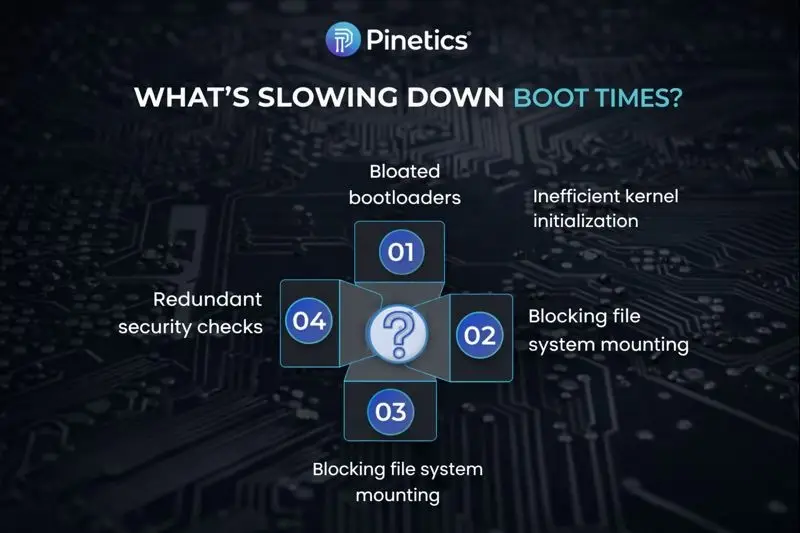
Reducing embedded boot time on a Linux device starts with timing every boot stage, then removing what the product never uses from the bootloader, kernel and startup sequence. Most hidden startup delays sit in configuration, not hardware: drivers probed for absent peripherals, services started before anything needs them, a file system mounted before the application

How Do You Reduce Boot Time on an Embedded Linux Device? Read More »

Modern Industrial Protocols

How Do You Bridge Legacy and Modern Industrial Protocols?

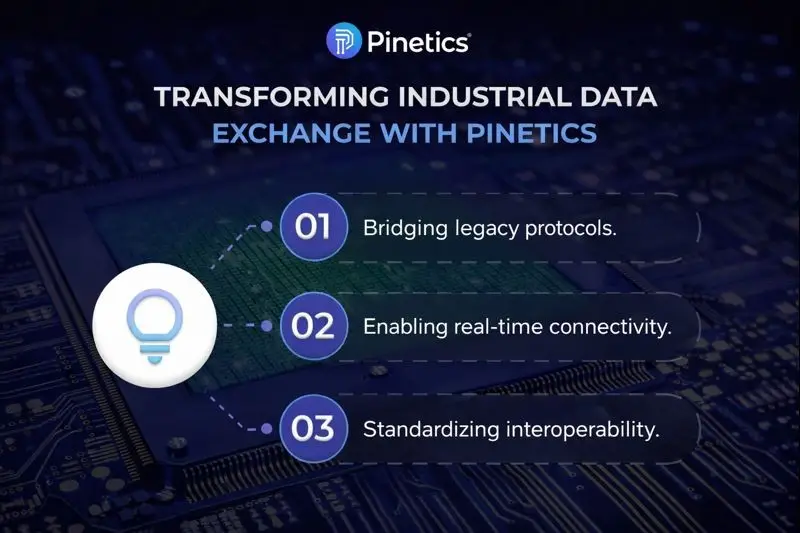
You bridge legacy and modern industrial protocols with a translation layer, usually an embedded gateway, between machines that speak Modbus, PROFIBUS, CAN or RS-485 and platforms that expect OPC UA, MQTT or REST, so that integrating legacy industrial protocols with IoT analytics platforms does not mean replacing machines. Pinetics bridges legacy and modern industrial protocols

How Do You Bridge Legacy and Modern Industrial Protocols? Read More »