
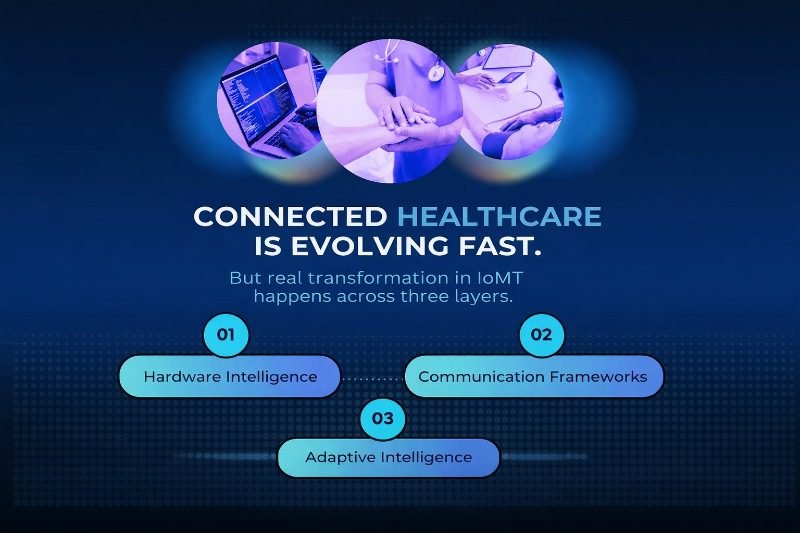
Embedded systems are driving a transformation in healthcare. From real-time patient monitoring to automated diagnostics, these intelligent platforms fundamentally change how care is delivered and experienced.
Medical devices are no longer single-function machines. They are now intelligent, connected systems that sense, analyze, and respond to physiological data in real time. Advances in embedded systems, computing, and integrated electronics drive this evolution.
Designing healthcare embedded systems involves more than technical performance. It calls for precision engineering, regulatory awareness, robust security, and long-term reliability.
At Pinetics, our focus is on transforming medical care with precision-engineered, regulatory-compliant, and robust embedded systems. Through specialized hardware design, firmware development, and integrated product solutions, we deliver safer and smarter healthcare technologies.
The Role of Embedded Systems in Modern Healthcare
Embedded systems form the core intelligence of modern medical devices. Whether in ICU monitoring systems, wearable health trackers, diagnostic imaging equipment, or implantable technologies, embedded platforms enable continuous sensing and real-time decision-making.
Healthcare increasingly depends on platforms that can operate reliably under strict timing constraints while maintaining clinical accuracy. This requires carefully engineered Embedded Systems Development that integrates sensing components, firmware logic, communication protocols, and security mechanisms.
Medical embedded systems must operate under conditions where failure is not an option. This makes architecture decisions fundamentally different from those in consumer electronics or industrial systems.
Real-Time Processing in Medical Devices
One of the most important capabilities enabled by embedded systems is real-time processing. Medical devices must capture and analyze physiological signals in real time, without delays that could affect patient outcomes.
Examples include:
- Wearable cardiac monitors detecting arrhythmias
- Imaging systems processing diagnostic signals
- Infusion pumps manage medication delivery
- ICU monitoring devices tracking multiple vital signs
Achieving this level of responsiveness requires coordinated Hardware Firmware Development, where microcontrollers, sensors, and firmware algorithms operate as a tightly synchronized system.
Real-time embedded processing ensures that medical devices deliver insights when they matter most during clinical decision-making.
AI-Powered Predictive Healthcare
Embedded systems are increasingly capable of running AI models locally. This shift is enabling predictive healthcare, where devices detect patterns before symptoms become critical.
AI-enabled embedded devices can:
- Identify abnormal cardiac rhythms
- Detect respiratory irregularities
- Monitor patient movement patterns
- Analyze imaging signals
- Predict equipment maintenance needs
These capabilities depend on efficient Firmware Development Services that optimize signal processing pipelines and memory usage while maintaining deterministic behavior.
Embedded AI allows healthcare systems to move from reactive treatment to preventive care, one of the most significant shifts in modern medicine.
Edge Computing for Instant Clinical Insights
Cloud computing plays an important role in healthcare analytics, but many medical decisions must happen locally and immediately. Edge computing enables devices to process data locally, reducing latency and improving reliability.
Through advanced Embedded Product Development Services, devices can perform:
- On-device signal filtering
- Anomaly detection
- Local diagnostics
- Secure data logging
- Real-time alert generation
Edge computing is particularly valuable in environments with limited connectivity, such as ambulances, rural clinics, or home-care settings.
By reducing dependence on remote servers, embedded platforms improve both resilience and clinical responsiveness.
Medical-Grade Security and Compliance
Security is a critical requirement in connected healthcare systems. Medical devices handle sensitive patient data and must operate safely within clinical environments.
Modern Medical Device Hardware Design integrates security features directly into device architecture, including:
- Secure boot mechanisms
- Encrypted firmware storage
- Hardware-based authentication
- Protected communication interfaces
- Tamper-resistant firmware design
Firmware also plays a vital role in maintaining device integrity. Through secure update mechanisms and validation protocols, Firmware Development Services ensure devices remain protected throughout their operational lifecycle.
Regulatory compliance adds another layer of complexity. Embedded systems must align with safety, data protection, and risk management standards, making compliance-aware engineering essential.
Seamless IoT Integration in Healthcare Systems
Healthcare systems are becoming increasingly connected. Embedded devices must communicate reliably with hospital infrastructure, cloud platforms, and remote monitoring systems.
IoT-enabled medical devices support:
- Remote patient monitoring
- Automated clinical alerts
- Centralized data management
- Telemedicine workflows
- Predictive maintenance systems
Achieving this level of integration requires robust Embedded Systems Development combined with scalable Hardware Firmware Development.
Secure communication protocols, reliable firmware architecture, and resilient hardware design ensure medical devices remain connected without compromising safety or performance.
Precision Engineering for Medical Reliability
Unlike consumer electronics, medical devices must operate consistently across diverse environments and usage conditions. Embedded systems must handle electrical noise, temperature variations, power fluctuations, and long-duration operation.
Precision in Medical Device Hardware Design ensures:
- Signal fidelity in sensing circuits
- Stable power delivery
- Electromagnetic compatibility
- Predictable timing behavior
- Long-term durability
Firmware must complement hardware reliability by managing error recovery, diagnostics, and system monitoring.
This level of engineering discipline ensures devices can be trusted in clinical settings where reliability directly impacts patient safety.
The Future of Embedded Healthcare Technology
Healthcare digital transformation is accelerating, and embedded systems are at the center, driving safer, more connected, and more personalized care.
Future innovations in Embedded Systems Development will include:
- Ultra-low-power wearable diagnostics
- AI-enabled implantable devices
- Autonomous monitoring systems
- Decentralized clinical analytics
- Adaptive therapeutic devices
These technologies will enable healthcare systems to deliver continuous, personalized care rather than episodic treatment.
Embedded platforms will increasingly operate in the background, invisible to patients but essential to their well-being.
Final Thoughts
Embedded systems are the foundation of modern medical innovation. They enable real-time monitoring, predictive diagnostics, secure connectivity, and intelligent healthcare delivery.
Pinetics specializes in building reliable, compliant, and future-ready embedded medical technologies. We unite expertise across hardware design, firmware development, and systems engineering to meet healthcare’s strict demands with the core goal of transforming patient care through technology.
As healthcare continues to evolve, embedded platforms will remain at the center of innovation, powering smarter devices, safer diagnostics, and more connected patient care. Pinetics is proud to be part of that transformation, building the future of healthcare one embedded system at a time.