Engineering

Avoiding Engineering Misfires

How to Avoid Costly Engineering Misfires

Choosing the wrong engineering partner rarely looks like a mistake at the beginning. On paper, everything appears aligned: strong portfolios, confident communication, competitive pricing, and impressive technical claims. But three months into development, reality often tells a different story. Timelines start slipping. Product quality becomes inconsistent. Communication slows down. Instead of accelerating development, your internal team […]
How to Avoid Costly Engineering Misfires Read More »

IoT Gateway

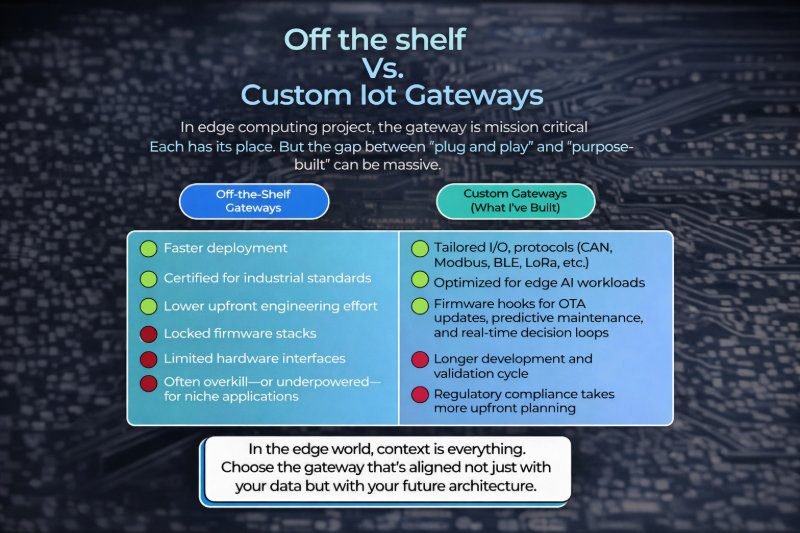
Choosing the Right IoT Gateway for Edge Computing Projects

In modern edge computing architectures, the IoT gateway is more than a connectivity device. It acts as the operational brain of distributed systems, orchestrating communication between sensors, embedded devices, and cloud infrastructure. Selecting the right gateway architecture can determine whether an IoT deployment scales smoothly or becomes a long-term engineering bottleneck. Through real-world implementations across industrial automation,

Choosing the Right IoT Gateway for Edge Computing Projects Read More »

Why Offshore Development Centers Fail and How to Build to Scale

“I’d rather scale slowly than go through that mess again.”  That was the candid assessment from a technology leader we spoke with recently. His previous Offshore Development Center (ODC) was intended to be a growth enabler, an extension of his core engineering team that would accelerate product delivery and reduce costs. Instead, it became a bottleneck.  Deadlines slipped.

Why Offshore Development Centers Fail and How to Build to Scale Read More »

Hardware Innovation

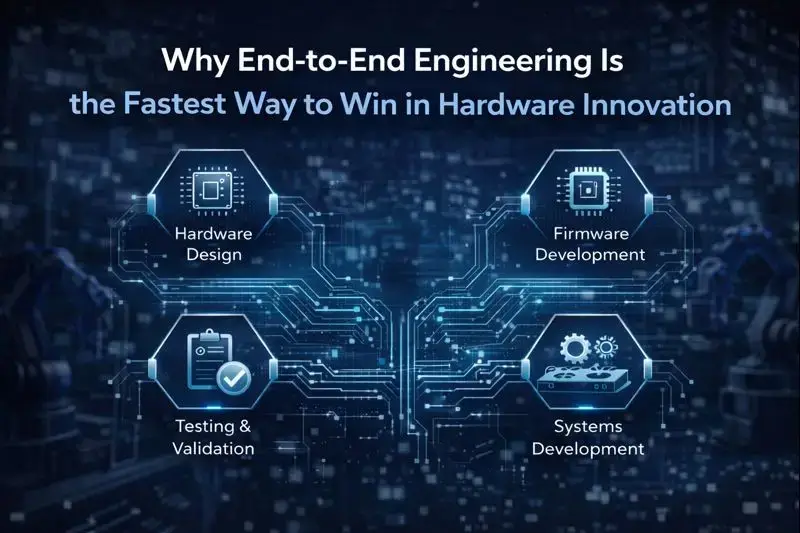
Why End-to-End Engineering Accelerates Hardware Innovation

A hardware startup approached us with a familiar but urgent problem. They had a game-changing product idea, one that could redefine their market. Investor’s interest was strong, early customer validation was promising, and the opportunity window was clear. Yet every development cycle kept slipping. Weeks turned into months. Deadlines have moved. Cost climbing. Their biggest threat wasn’t competition; it was time.

Why End-to-End Engineering Accelerates Hardware Innovation Read More »

Industrial Automation

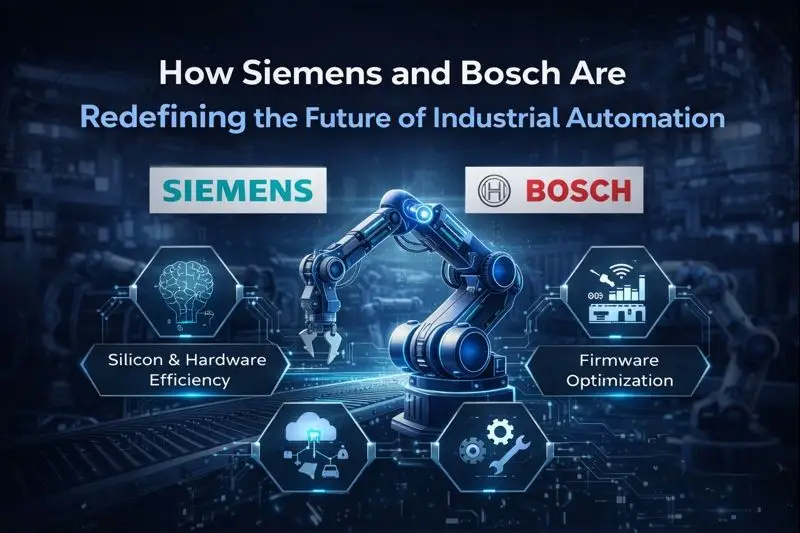
How Siemens and Bosch Are Shaping Industrial Automation

For decades, industrial automation was built around predictability. Factories were designed for static workflows, fixed production lines, hard-coded logic, and centralized control systems that changed only when engineers manually reprogrammed them. Programmable Logic Controllers (PLCs) executed deterministic routines, sensors reported status, and optimization happened periodically, not continuously. That era is over. Today’s industrial environments operate under constant

How Siemens and Bosch Are Shaping Industrial Automation Read More »

Smart Tool

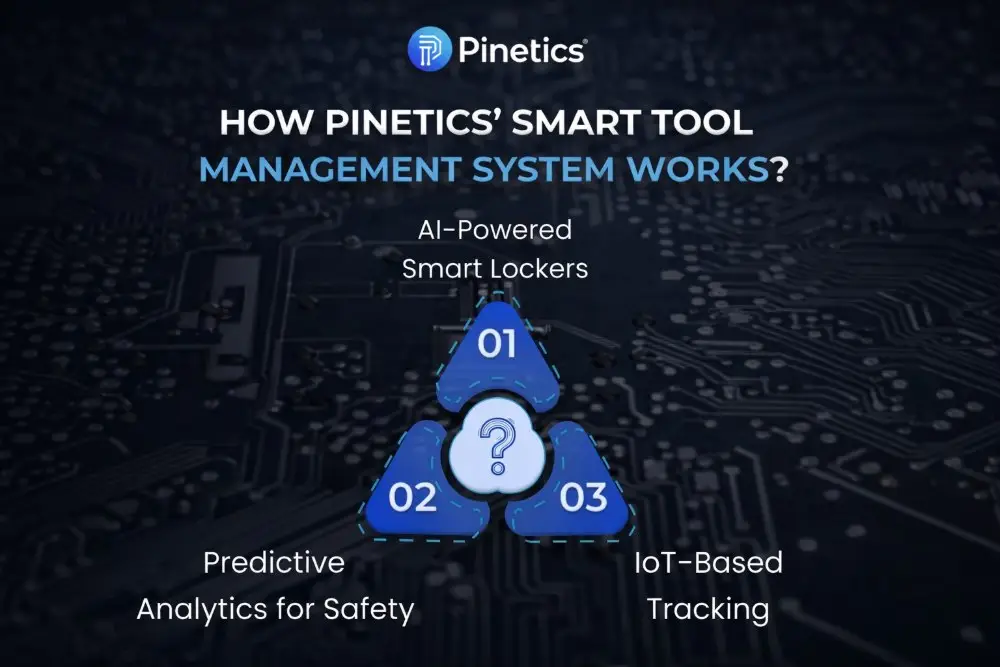
Reinventing Industrial Safety with AI-Driven Smart Tool Management

Industrial environments operate on precision, discipline, and safety. From aerospace manufacturing floors to heavy engineering plants and healthcare facilities, every tool has a purpose, and every misplaced tool introduces risk. Yet despite advances in automation, one critical area remains surprisingly manual and error-prone: tool management. At Pinetics, we partnered with a customer delivering a next-generation, AI-powered tool management system built specifically for

Reinventing Industrial Safety with AI-Driven Smart Tool Management Read More »

Autonomous Smart Lockers

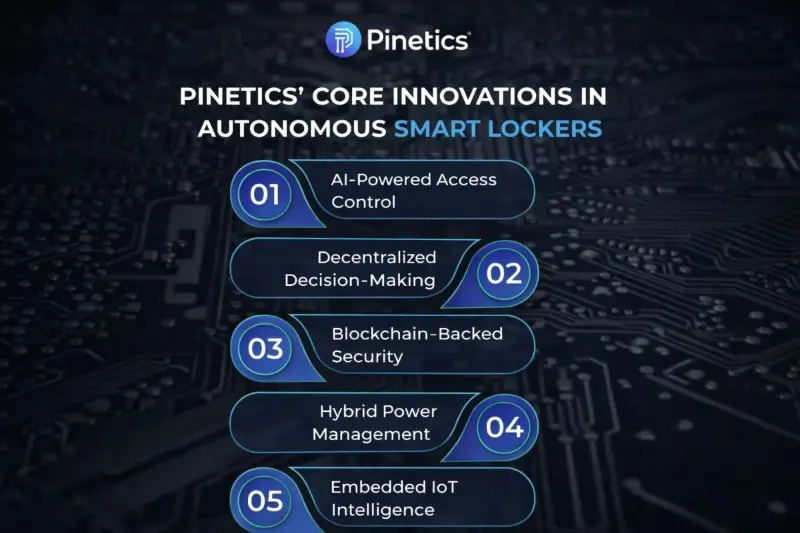
The Future of Smart Lockers Is Autonomous and Decentralized

Smart infrastructure is evolving rapidly, but many “smart” systems still carry the limitations of yesterday’s architecture. Smart lockers are a perfect example. While widely deployed in logistics, retail, corporate campuses, residential buildings, and healthcare environments, most existing smart locker systems continue to depend heavily on centralized servers and constant internet connectivity.  This dependence creates hidden operational

The Future of Smart Lockers Is Autonomous and Decentralized Read More »

Workforce Flexibility

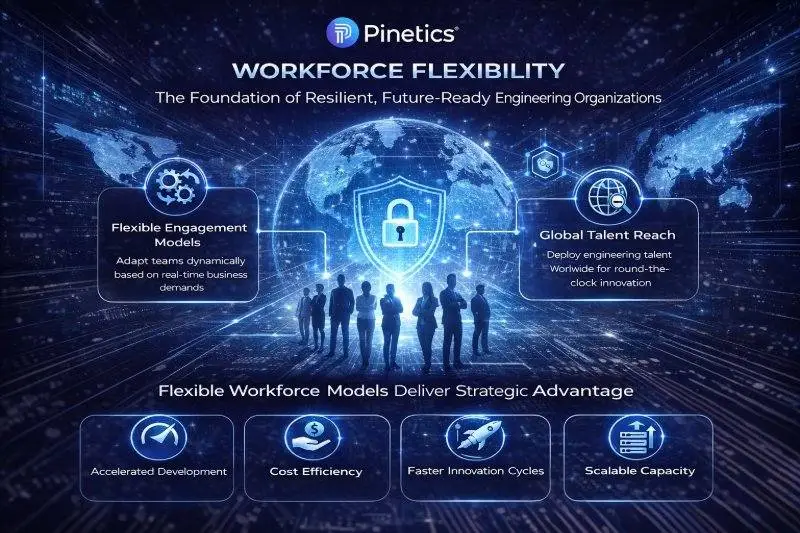
Foundation of Resilient, Future-Ready Engineering Organizations

The pace of business transformation has accelerated beyond anything organizations experienced in previous decades. Market dynamics shift rapidly, technology stacks evolve continuously, and customer expectations change in real time. Yet many companies are still constrained by the workforce and hiring models designed for a far more predictable world.  Traditional hiring structures assume stability, fixed workloads, well-defined skill requirements, and

Foundation of Resilient, Future-Ready Engineering Organizations Read More »