MedTech

RTOS vs Bare Metal in MedTech

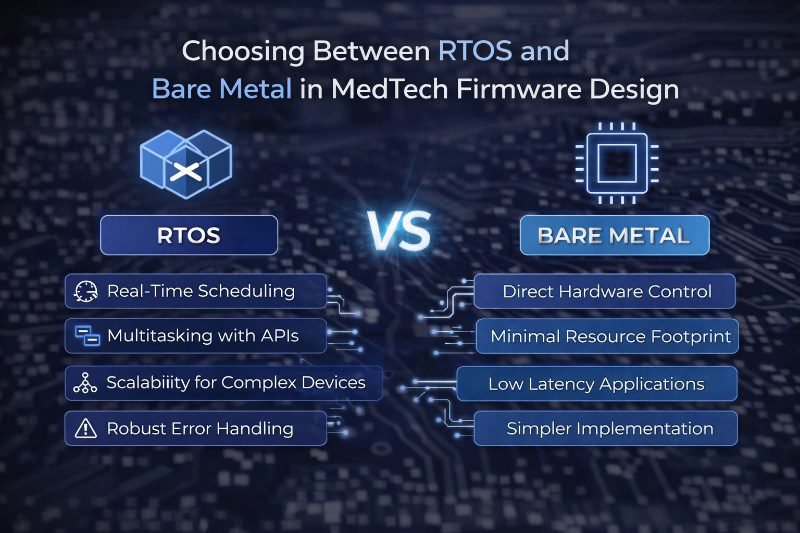
Choosing Between RTOS and Bare Metal in MedTech Firmware Design

The most significant decision in medical device firmware is made before the application code: RTOS or bare metal? RTOS or bare metal? On the surface, this choice is often framed as a technical preference or performance trade-off. Especially for Class II and Class III medical devices, it is neither. It is a risk-alignment decision. Your architecture shapes how firmware […]

Choosing Between RTOS and Bare Metal in MedTech Firmware Design Read More »
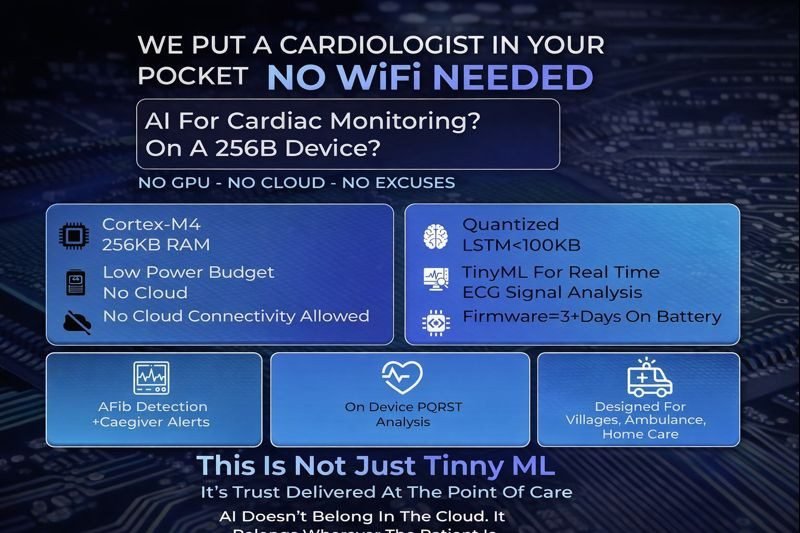
Cardiac Monitor with TinyML

How We Built a Portable Cardiac Monitor with TinyML

When we began building a portable cardiac monitor, the goal sounded deceptively simple: detect arrhythmias early, at the point of care, without relying on the cloud. The challenge was far more complex. We were not designing a research prototype or a proof-of-concept demo. This device needed to work reliably in ambulances, remote clinics, home-care environments, and

How We Built a Portable Cardiac Monitor with TinyML Read More »

Protect IP When Offshoring Development

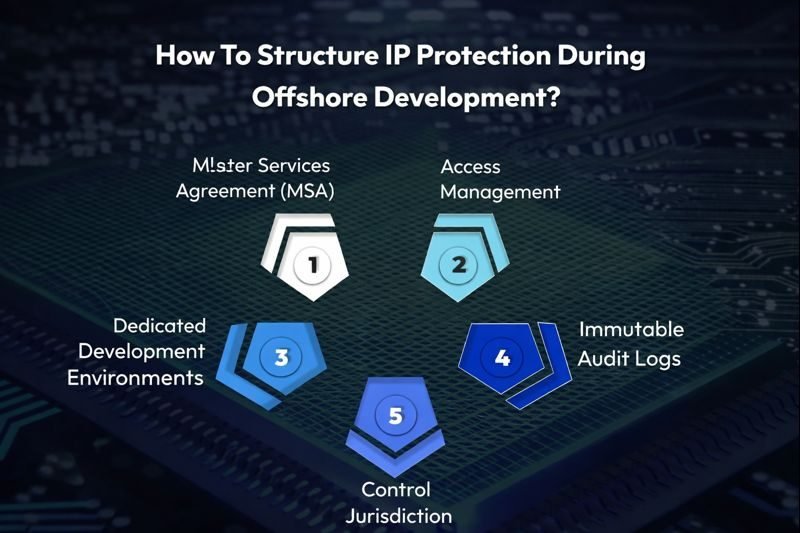
Protect Your Intellectual Property When Offshoring Development

Offshoring development is a strategic necessity for many organizations, offering access to global talent, faster scaling, and cost efficiency for both startups and enterprises. However, concerns about intellectual property protection persist. Most IP breaches occur because companies use weak frameworks, informal controls, or assume that trust is enough, rather than taking deliberate measures to prevent

Protect Your Intellectual Property When Offshoring Development Read More »

Medical Implants Become Intelligent Companions

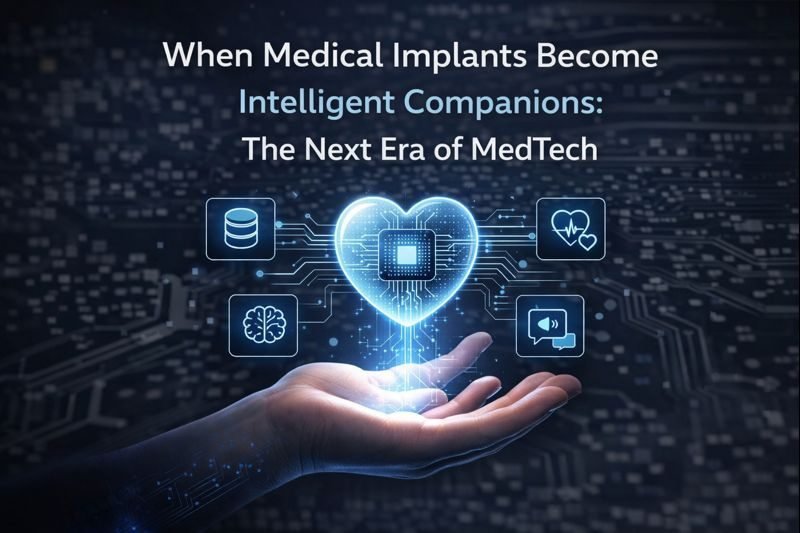
When Medical Implants Become Intelligent Companions

What if your pacemaker understood you better than your cardiologist? Not in a dystopian, surveillance-driven way but in a deeply clinical, human-centred sense. Imagine a device that recognizes subtle physiological patterns unique to you. It notices how your heart rate changes during stress, sleep, or emotional strain. It adapts to therapy in real time, not based on population

When Medical Implants Become Intelligent Companions Read More »

Firmware Optimization

Firmware Optimization Is a Critical Safety Factor in Medical Devices

We’ve reviewed and optimized firmware for dozens of medical devices over the years, devices where milliseconds matter, power efficiency determines usability, and uptime can directly affect patient outcomes. A recurring issue I encounter is firmware that functions but is dangerously inefficient. In medical technology, “working” does not mean “safe,” “reliable,” or “clinically trustworthy.” Poorly optimized firmware may pass basic validation. Yet

Firmware Optimization Is a Critical Safety Factor in Medical Devices Read More »

UX Priorities in Medical Devices Projects

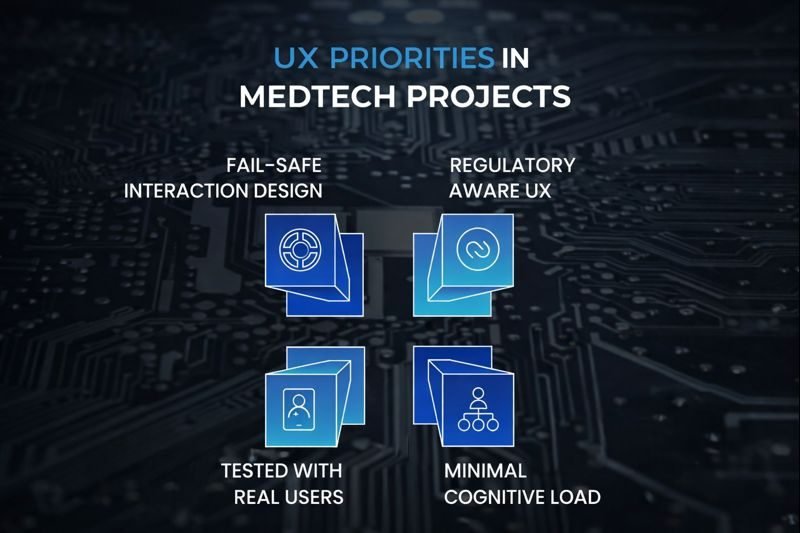
Interface Design in Medical Devices Is a Matter of Clinical Clarity

In medical technology, interface design emphasizes clarity over aesthetics. It is about clinical clarity. A well-designed interface can reduce cognitive overload, accelerate decision-making, and prevent critical errors. A poorly designed one can do the opposite, introducing friction at the exact moment when speed, confidence, and accuracy matter most. In high-stakes environments such as intensive care units, operating rooms,

Interface Design in Medical Devices Is a Matter of Clinical Clarity Read More »

Medical Device Development

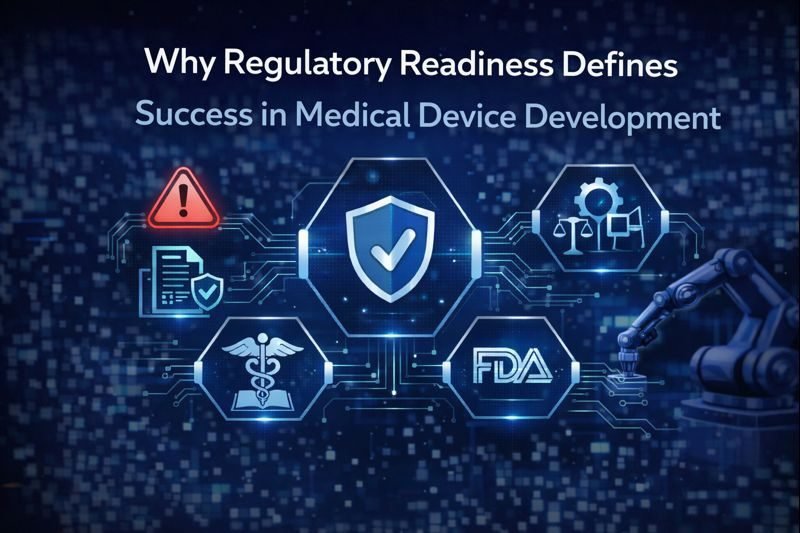
Regulatory Readiness in Medical Device Development Success

Building a medical device is only half of the challenge. Bringing it to market with full regulatory approval is where the real work begins. Many teams underestimate this phase. They assume that once the device functions as intended, regulatory clearance will follow with the right paperwork and enough patience. Regulatory success is not about documentation alone. It is about

Regulatory Readiness in Medical Device Development Success Read More »

Embedded Systems

Regulation Becomes the Make-or-Break Factor in MedTech Innovation

Startups rarely fail because of bad ideas. More often, they fail because of blind spots, assumptions left unchallenged, risks left unmodeled, and realities discovered too late. In MedTech, one of the most unforgiving blind spots is regulation. A recent example from India brought this into sharp focus. Zoplar, a promising MedTech startup backed by Blume Ventures, shut

Regulation Becomes the Make-or-Break Factor in MedTech Innovation Read More »

Embedded Systems

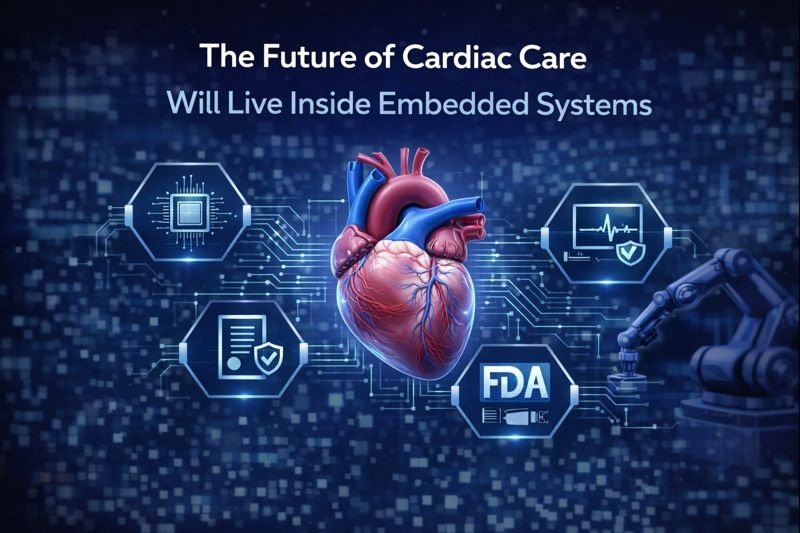
Future of Cardiac Care Will Live Inside Embedded Systems

For decades, cardiovascular care has been centered around hospitals. Patients visit clinics for tests. Data is captured intermittently. Clinicians analyze results after the fact. Intervention happens when symptoms become visible or when it is already too late. This model is no longer sufficient. The future of cardiac care will move beyond hospitals, becoming seamlessly integrated into embedded

Future of Cardiac Care Will Live Inside Embedded Systems Read More »

Cardiovascular Diagnostics

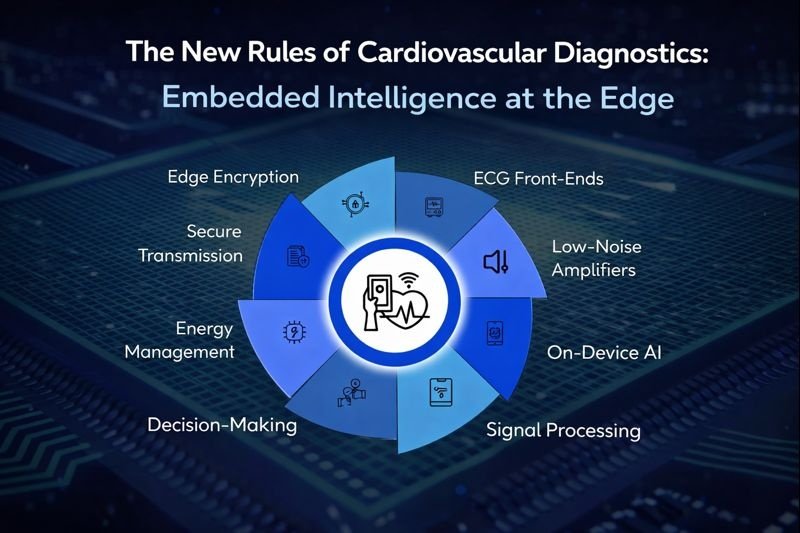
Embedded Intelligence in Cardiovascular Diagnostics

Cardiovascular disease remains the leading cause of death worldwide, yet the most dangerous cardiac events rarely arrive without warning. Clinical studies suggest that nearly 70% of major cardiac incidents are preceded by subtle micro-patterns; brief, transient electrical anomalies that appear long before symptoms become obvious. The challenge is not the absence of signals. It is our inability to capture, interpret,

Embedded Intelligence in Cardiovascular Diagnostics Read More »