March 2026

RTOS vs Bare Metal in MedTech

Choosing Between RTOS and Bare Metal in MedTech Firmware Design

The most significant decision in medical device firmware is made before the application code: RTOS or bare metal? RTOS or bare metal? On the surface, this choice is often framed as a technical preference or performance trade-off. Especially for Class II and Class III medical devices, it is neither. It is a risk-alignment decision. Your architecture shapes how firmware […]

Choosing Between RTOS and Bare Metal in MedTech Firmware Design Read More »

Firmware Loops

How Firmware Loops Can Quietly Drain a Wearable’s Battery

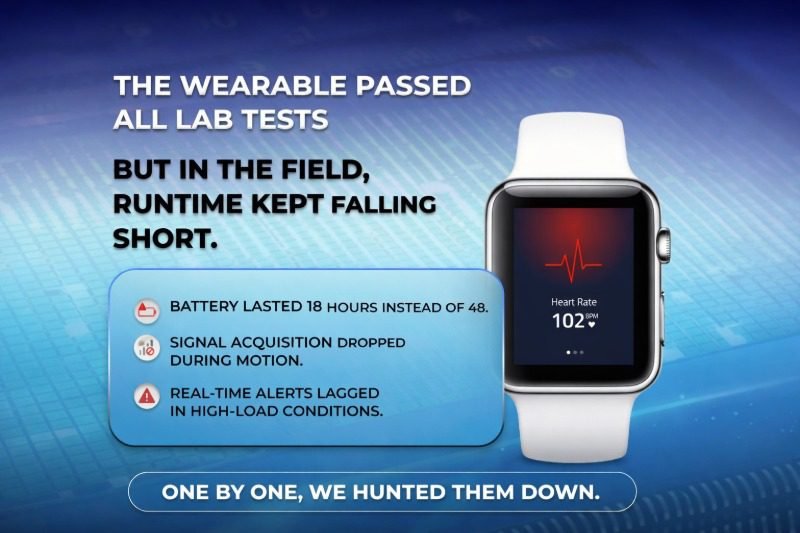
A wearable heart monitor once failed in the field, not because of faulty sensors, poor manufacturing, or inaccurate algorithms. It failed because of a firmware loop. A single loop that never allowed the processor to truly rest. The result? The battery drained eight hours earlier than expected, shutting the device down just before a critical cardiac episode. In

How Firmware Loops Can Quietly Drain a Wearable’s Battery Read More »

Firmware Engineers

Why Firmware Engineers Must Understand Medical Regulations

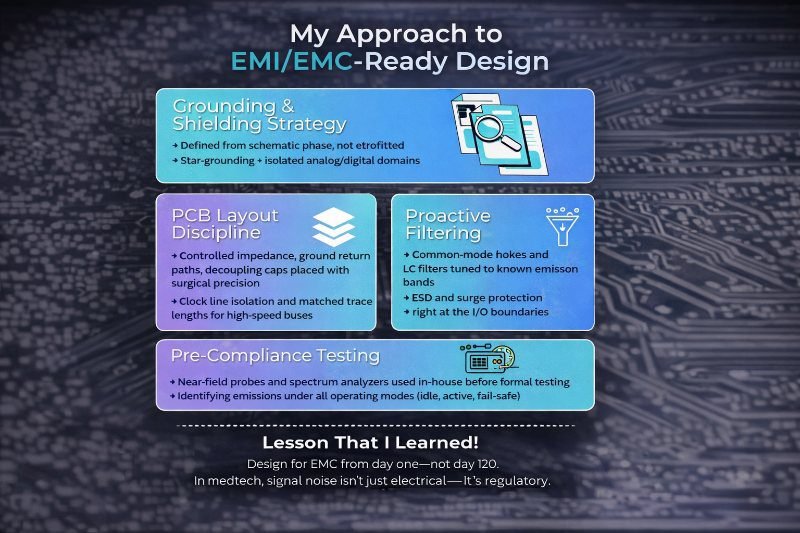
In most industries, firmware is judged by whether it works. In MedTech, firmware is judged by whether it can be proven to work safely and consistently under every foreseeable condition. You cannot patch your way out of non-compliance. And you cannot debug your way past a failed audit. In medical devices, firmware is not just logic running on silicon. It is

Why Firmware Engineers Must Understand Medical Regulations Read More »

Cardiac Monitor with TinyML

How We Built a Portable Cardiac Monitor with TinyML

When we began building a portable cardiac monitor, the goal sounded deceptively simple: detect arrhythmias early, at the point of care, without relying on the cloud. The challenge was far more complex. We were not designing a research prototype or a proof-of-concept demo. This device needed to work reliably in ambulances, remote clinics, home-care environments, and

How We Built a Portable Cardiac Monitor with TinyML Read More »

Protect IP When Offshoring Development

Protect Your Intellectual Property When Offshoring Development

Offshoring development is a strategic necessity for many organizations, offering access to global talent, faster scaling, and cost efficiency for both startups and enterprises. However, concerns about intellectual property protection persist. Most IP breaches occur because companies use weak frameworks, informal controls, or assume that trust is enough, rather than taking deliberate measures to prevent

Protect Your Intellectual Property When Offshoring Development Read More »