MedTech

Portable Brain Imaging

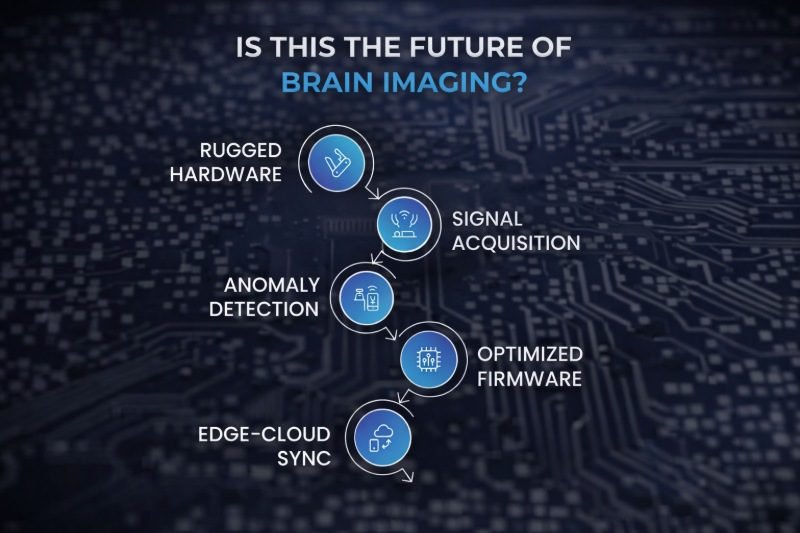
Is Portable Brain Imaging the Future of Emergency Diagnostics?

Brain injuries do not respect ideal clinical environments. Trauma, stroke, or neurological complications can strike anywhere, at any time. The crucial first hour after injury often determines long-term outcomes. Yet most diagnostic imaging tools remain confined to hospitals, tied to specialized infrastructure and trained operators. Computed tomography (CT) scanners and MRI systems have set the standard in neurological imaging for years. […]

Is Portable Brain Imaging the Future of Emergency Diagnostics? Read More »

Medical Devices

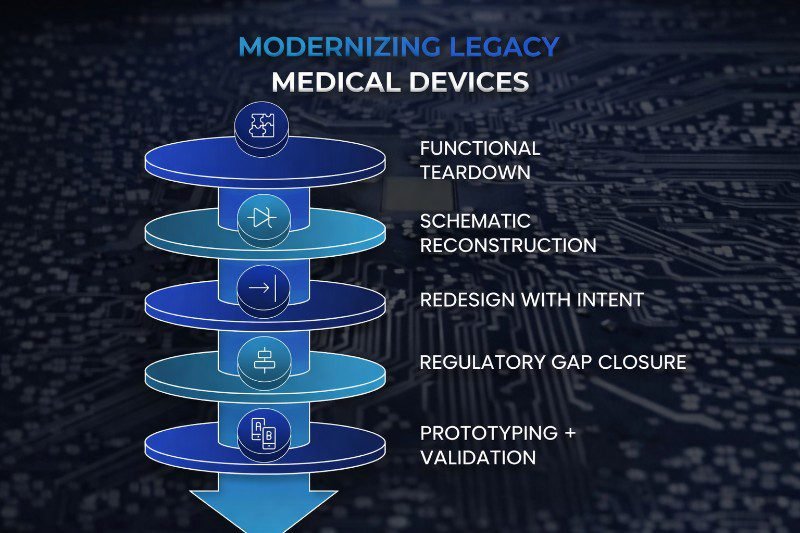
Modernizing Legacy Medical Devices Through Intelligent Redesign

Across hospitals, clinics, and diagnostic labs worldwide, thousands of medical devices still operate electronics designed decades ago. These systems continue to perform essential clinical functions, yet their internal architectures often rely on obsolete components, undocumented firmware behavior, and manufacturing processes that are increasingly difficult to sustain. Legacy devices are rarely replaced quickly in healthcare environments. The cost

Modernizing Legacy Medical Devices Through Intelligent Redesign Read More »

Firmware Mistakes in MedTech Scale-ups

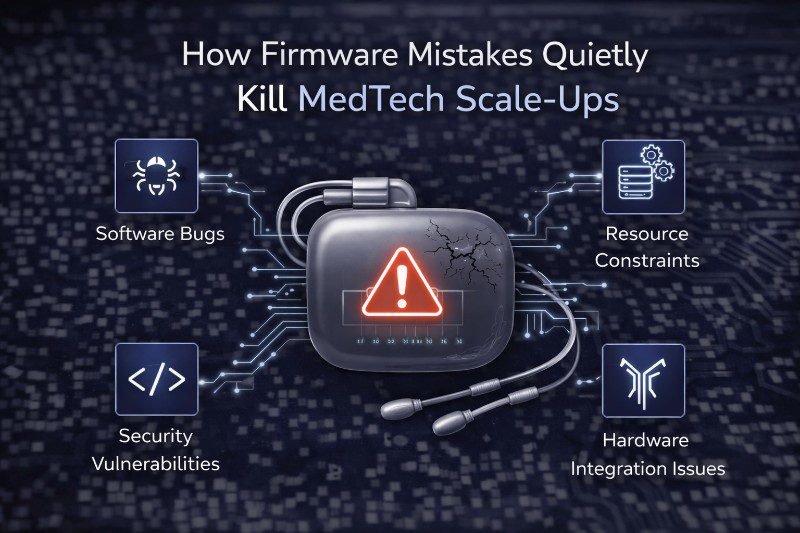
How Firmware Mistakes Quietly Kill MedTech Scale-Ups

In early-stage MedTech development, hardware usually gets the spotlight. Investors ask about sensors, algorithms, clinical validation, and manufacturing readiness. Teams celebrate when prototypes work reliably in controlled environments. However, as products transition from early development to scaling for real-world deployment, a different reality emerges, one that often catches teams off guard. The challenge is not the

How Firmware Mistakes Quietly Kill MedTech Scale-Ups Read More »

Arrhythmia Detection System

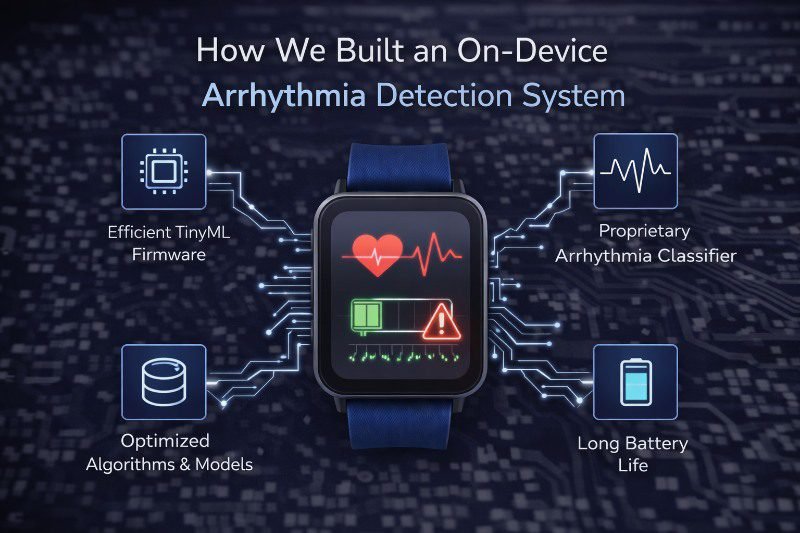
How We Built an On-Device Arrhythmia Detection System

When we set out to build an on-device arrhythmia detection system, innovation was never the headline goal. Reliability was. We weren’t trying to prove that AI could run on tiny hardware. We were solving a far more grounded and urgent problem: How do you deliver life-saving cardiac intelligence on a chip with less RAM than a smartwatch face without

How We Built an On-Device Arrhythmia Detection System Read More »

RTOS vs Bare Metal in MedTech

Choosing Between RTOS and Bare Metal in MedTech Firmware Design

The most significant decision in medical device firmware is made before the application code: RTOS or bare metal? RTOS or bare metal? On the surface, this choice is often framed as a technical preference or performance trade-off. Especially for Class II and Class III medical devices, it is neither. It is a risk-alignment decision. Your architecture shapes how firmware

Choosing Between RTOS and Bare Metal in MedTech Firmware Design Read More »

Cardiac Monitor with TinyML

How We Built a Portable Cardiac Monitor with TinyML

When we began building a portable cardiac monitor, the goal sounded deceptively simple: detect arrhythmias early, at the point of care, without relying on the cloud. The challenge was far more complex. We were not designing a research prototype or a proof-of-concept demo. This device needed to work reliably in ambulances, remote clinics, home-care environments, and

How We Built a Portable Cardiac Monitor with TinyML Read More »

Protect IP When Offshoring Development

Protect Your Intellectual Property When Offshoring Development

Offshoring development is a strategic necessity for many organizations, offering access to global talent, faster scaling, and cost efficiency for both startups and enterprises. However, concerns about intellectual property protection persist. Most IP breaches occur because companies use weak frameworks, informal controls, or assume that trust is enough, rather than taking deliberate measures to prevent

Protect Your Intellectual Property When Offshoring Development Read More »

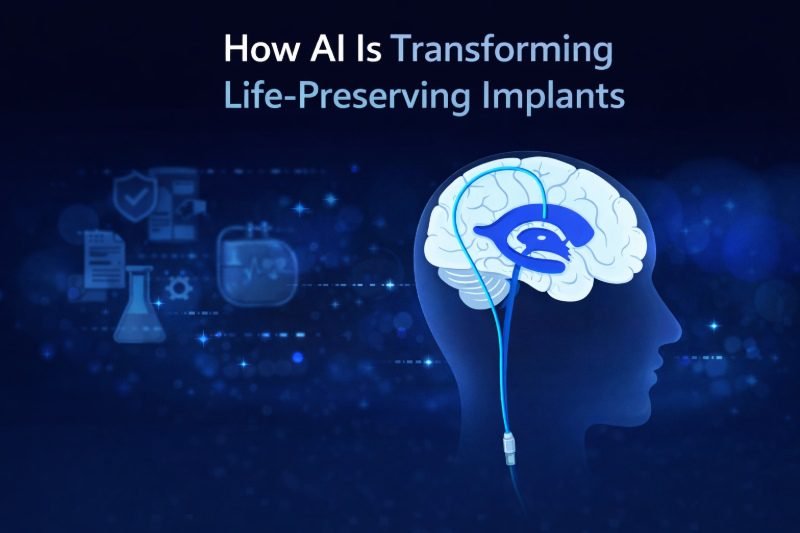
Medical Implants Become Intelligent Companions

When Medical Implants Become Intelligent Companions

What if your pacemaker understood you better than your cardiologist? Not in a dystopian, surveillance-driven way but in a deeply clinical, human-centred sense. Imagine a device that recognizes subtle physiological patterns unique to you. It notices how your heart rate changes during stress, sleep, or emotional strain. It adapts to therapy in real time, not based on population

When Medical Implants Become Intelligent Companions Read More »

Firmware Optimization

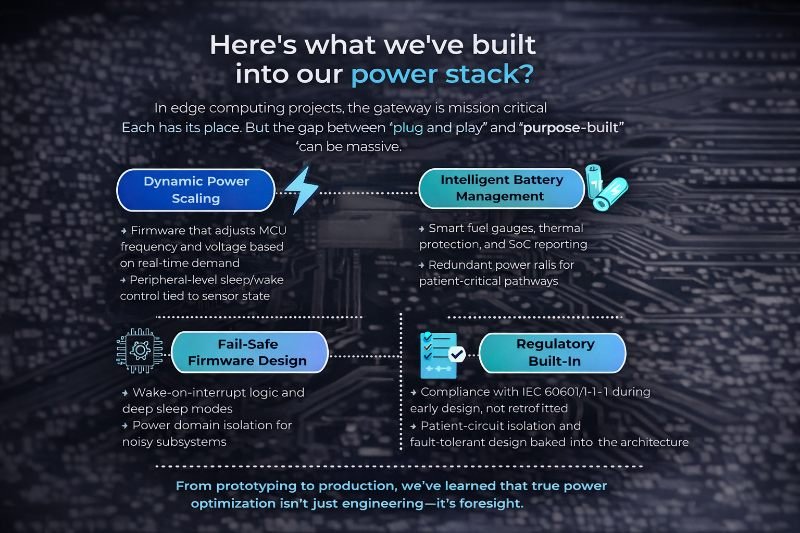
Firmware Optimization Is a Critical Safety Factor in Medical Devices

We’ve reviewed and optimized firmware for dozens of medical devices over the years, devices where milliseconds matter, power efficiency determines usability, and uptime can directly affect patient outcomes. A recurring issue I encounter is firmware that functions but is dangerously inefficient. In medical technology, “working” does not mean “safe,” “reliable,” or “clinically trustworthy.” Poorly optimized firmware may pass basic validation. Yet

Firmware Optimization Is a Critical Safety Factor in Medical Devices Read More »

UX Priorities in Medical Devices Projects

Interface Design in Medical Devices Is a Matter of Clinical Clarity

In medical technology, interface design emphasizes clarity over aesthetics. It is about clinical clarity. A well-designed interface can reduce cognitive overload, accelerate decision-making, and prevent critical errors. A poorly designed one can do the opposite, introducing friction at the exact moment when speed, confidence, and accuracy matter most. In high-stakes environments such as intensive care units, operating rooms,

Interface Design in Medical Devices Is a Matter of Clinical Clarity Read More »